
Singapore-based IB international school

At HWA International School, we recognise the importance of supporting children’s growth and development from an early age. Our programme provides age-appropriate learning experiences that encourage exploration, learning and development.
The Kindergarten years are a crucial stage of development for many children, and our programme helps prepare them for the transition to primary school. Kindergarten has been recognized by international standards of education as an important part of a child’s learning process. Teaching your child the basic life and social skills is of utmost significance to us at HWA International School. It will be a pleasure to us to welcome your child in his/her early stage of learning.
Your child will be educated to be a nurturing, caring and reflective future global leader. That’s what Hwa International School wants to encourage. Singapore’s International Baccalaureate Primary School is a program that looks at developing bright and curious individuals and preparing them for the future. The IB Primary Years in Singapore is a program that looks to develop smart and curious individuals and prepare them for the future. Learn more about the program here!
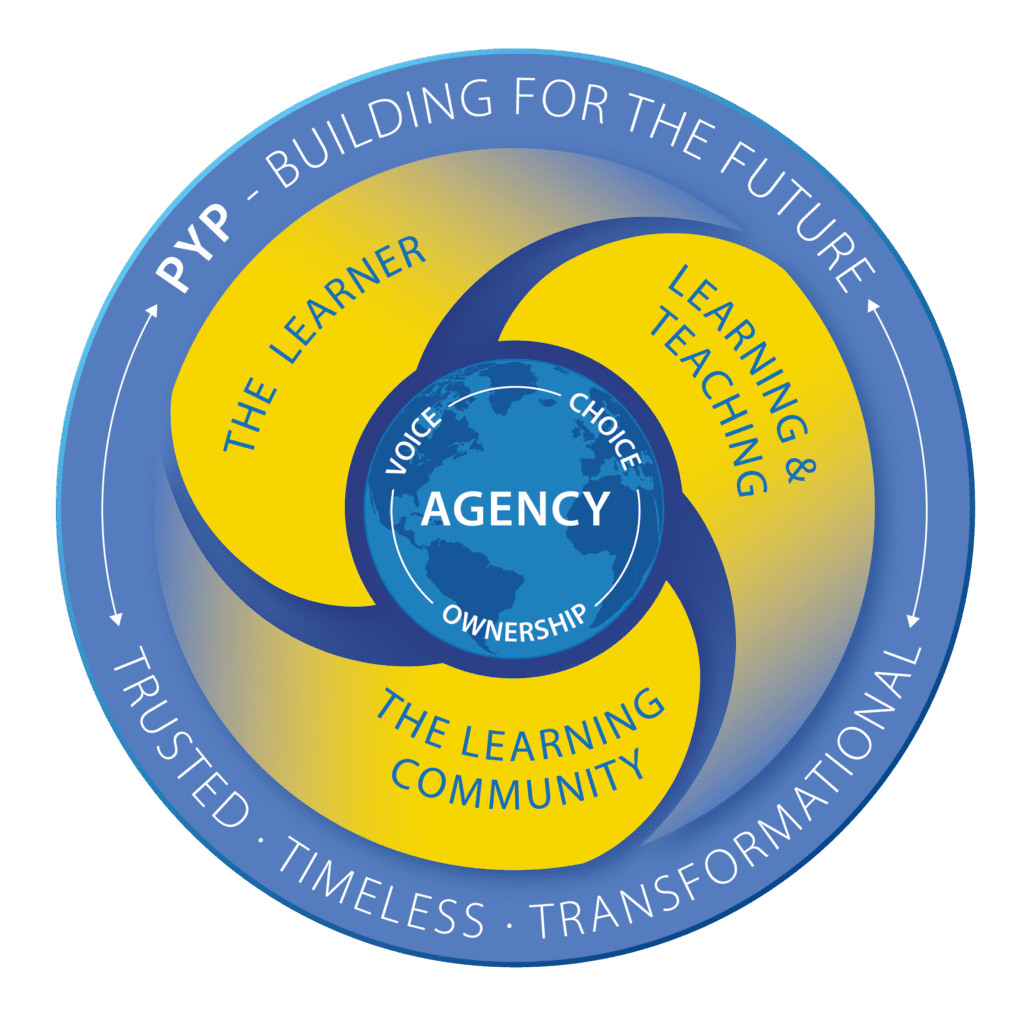
HWA International School Kindergarten offers the International Baccalaureate Primary Years Programme (PYP), providing a holistic and empowering learning experience for children. At HWA Kindergarten, the programme supports children in becoming caring and active participants in their own learning.

As an IB World School, HWA offers the Primary Years Programme (PYP) as part of its IB Continuum, providing a pathway into the Middle Years Programme (MYP) and Diploma Programme (DP).
“The International Baccalaureate aims to develop inquiring, knowledgeable and caring young people who help to create a better and more peaceful world through intercultural understanding and respect.
To this end the organization works with schools, governments and international organizations to develop challenging programmes of international education and rigorous assessment.
These programmes encourage students across the world to become active, compassionate and lifelong learners who understand that other people, with their differences, can also be right.”
Students will experience classroom environments that provide individualized attention, which also allows students to thrive intellectually, and improve their experiences. We cultivate values that embrace a whole-school community spirit and we encourage our students to participate in activities outside of the classroom.
The PYP aims to develop lifelong learners through the emphasis on the learner, learning and teaching, and the learning community. The transdisciplinary curriculum framework is also enhanced by lending the learner and the learning community the capacity to impact learning and teaching.

We focus on both disciplinary and transdisciplinary knowledge in HWA. There is time allocated for traditional subject lessons (language, maths, science, social studies, arts and physical, social and personal education). Transdisciplinary learning is done during exploration in Units of Inquiry (UoI). Each UoI is planned around one of the six transdisciplinary themes prescribed by The International Baccalaureate Primary Years Programme (IBPYP).

Conceptual understanding is the key feature in HWA PYP UoI. Students explore concepts through carefully planned learning experiences, providing opportunities to develop conceptual understanding within and beyond subject areas.

Approaches to learning (ATL) skills are incorporated through meticulous planning to support student learning. The skills are taught and reinforced in every unit with the aim of developing independent learning and encouraging application of what they have learnt in unfamiliar situations.

Each Unit of Inquiry provides opportunities for students to explore different perspectives and develop attributes that support international-mindedness and positive participation in the learning community.

Action, in the form of a project or service to the learning community, follows naturally from a successful inquiry conducted.


| Programme | Grade | Entry Requirement – Minimum Age | Academic Level | Language Proficiency |
| International Baccalaureate Primary Years Programme (IB – PYP) | Nursery | 3 | N.A. | N.A. |
| Kindergarten 1 | 4 | Completion of Nursery or equivalent | Equivalent of Nursery English proficiency | |
| Kindergarten 2 | 5 | Completion of K1 or equivalent | Equivalent of K1 English proficiency |
| Course Title | Mode | Duration | Start | End |
| International Baccalaureate Primary Years Programme (IB – PYP) — Nursey | Full-Time | 12 Months | August | July |
| International Baccalaureate Primary Years Programme (IB – PYP) — Kindergarten 1 | Full-Time | 12 Months | August | July |
| International Baccalaureate Primary Years Programme (IB – PYP) — Kindergarten 2 | Full-Time | 12 Months | August | July |
| International Baccalaureate Primary Years Immersion Programme (IB – PYP IMMERSION) | Full-Time | 1 Month | September, November, January, March, May | October, December, February, April, June |
Chinese
English
Unit of Inquiry
Mathematics
Science
Arts (Music & Visual Arts)
Personal, social and physical education
The teacher-student ratio as per 2026 data:
In HWA, we focus on equipping our students with the mastery of English and Mandarin – two most important languages we believe will give our students a competitive edge. We aim for our students to attain effective bilingualism by the following strategies:
The HWA student will need to
Assessment is an important part of each UoI as it both enhances learning and provides opportunities for students to reflect on what they know, understand, and can do. The teachers give feedback, which in turn guides our students to become more capable and independent learners. The type of certification awarded Upon completion of Kindergarten 2, students receive an HWA Kindergarten Graduation Certificate.